
A Brief History of Piazzale Michelangelo and Things to Do in This Beautiful Scenic Area

GPS coordinates for Piazzale Michelangelo: 43.76283, 11.26498
What was there before Piazzale Michelangelo?
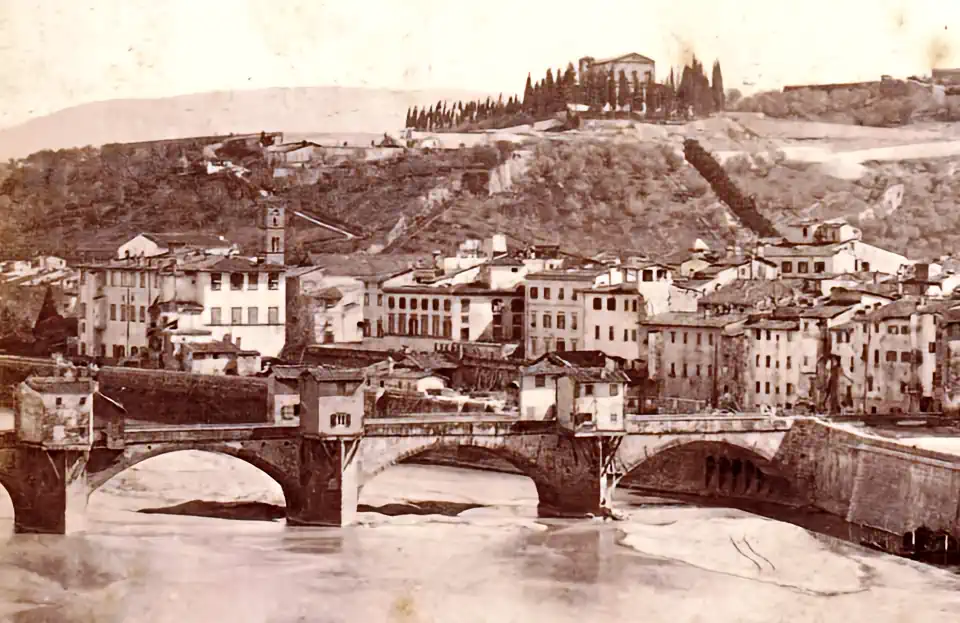
Before Piazzale Michelangelo was built, the area on the hills of San Miniato al Monte was occupied by farmland, villas, and private gardens; it was a hilly landscape with paths, olive groves, and a few rural buildings overlooking the Arno valley. An old photograph shows Ponte alle Grazie and, behind it, the hill where Piazzale Michelangelo would later be built. Note how the ancient Ponte alle Grazie once had small huts on its piers, a feature later adopted by Ponte Vecchio as well. The huts were demolished in 1876 to widen the bridge’s roadway and accommodate the tram line. This beautiful ancient bridge, built in 1237 under the name “Rubaconte,” withstood all the floods of the Arno River, including the most violent one in 1333 that destroyed the now-famous Ponte Vecchio and Ponte Santa Trinita. In 1944, it was destroyed by the Nazi army during World War II and was eventually rebuilt in a modern style, lacking the distinctive features that had set it apart.
When and why was Piazzale Michelangelo created?
Piazzale Michelangelo was designed and built between 1869 and 1875 as part of the urban transformations that followed the unification of Italy and during the period when Florence served as the capital of the Kingdom (1865–1871). The idea was to create a large panoramic viewpoint offering a sweeping view of the city, serving as a symbol of the city’s identity and an attraction for both visitors and residents. The project was entrusted to the Tuscan architect Giuseppe Poggi, who led a vast redevelopment of the banks of the Arno and the Florentine hills, redesigning avenues, squares, and paths and creating Piazzale Michelangelo. The plaza covers a significant portion of the Florentine hill located southeast of the historic center and features a terraced layout with a large paved area and panoramic balustrades, capable of accommodating large numbers of visitors, offering multiple walking paths and vantage points, and rich in pathways and tree-lined areas, including the groves behind it. The success of this redevelopment project is now widely acknowledged and evident; Piazzale Michelangelo enjoys worldwide fame and is visited each year by millions of tourists from all over the world.
Works of art at Piazzale Michelangelo
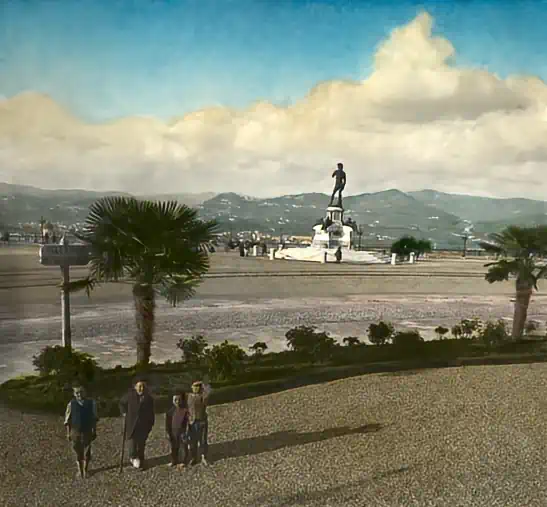
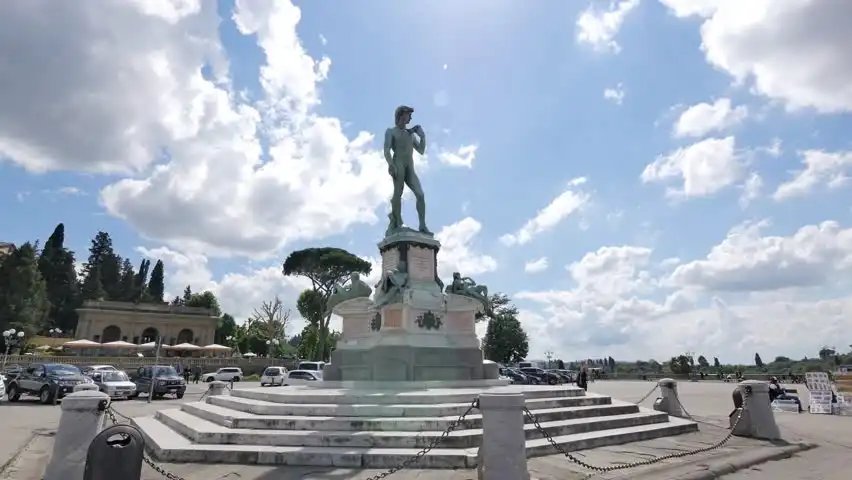
The square itself features a life-size bronze replica of the famous David statue, cast in 1873 and placed at the center of the square to make this iconic symbol of the Renaissance accessible to the public. The replica faces the city and is one of the main attractions. The statue of David is surrounded by four bronze replicas of the statues Day, Night, Twilight, and Dawn—known as the Allegories—the originals of which are located at the Medici Tombs. On either side of the square are bronze replicas of sculptures attributed to Michelangelo or inspired by his style, busts and monumental figures that evoke Renaissance iconography and complete the terrace’s scenic effect. Walking along the perimeter, one can see plaques and panels dedicated to historical events and local figures that help tell the story of the city and its 19th-century urban renewal. Among these are also neoclassical sculptural elements created in the 19th century for the square’s design (allegorical statues, mythological figures, and ornamental panels) that complement Giuseppe Poggi’s overall design. The square occasionally hosts outdoor exhibitions, temporary sculptures, and modern art installations placed for seasonal events and festivals; the artistic composition may therefore vary over time.
The scenery and the photographic experience
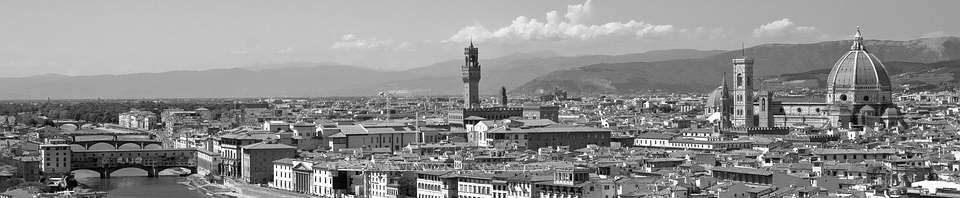
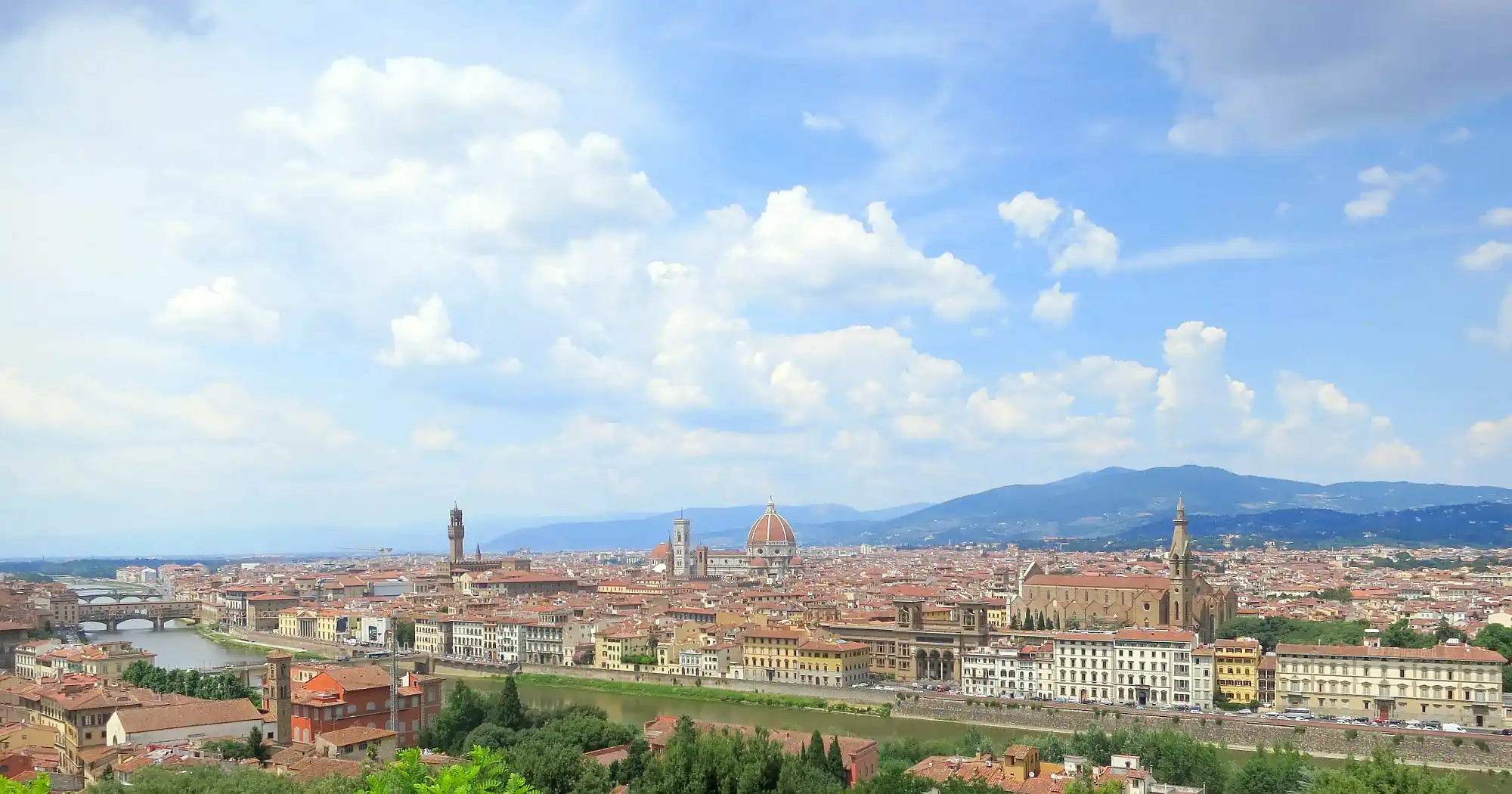
The view of Florence from Piazzale Michelangelo is spectacular; the breathtaking panorama takes in the historic center with its most iconic monuments and offers stunning scenes at any time of day or night. For those who love to capture striking photographs, Piazzale Michelangelo offers a wealth of opportunities: breathtaking panoramas, works of art, flowers and plants, street performers, markets, temporary exhibitions, churches, historic buildings, walking paths, magical atmospheres at dawn and dusk, and much more. The entire area of Piazzale Michelangelo and its surroundings is widely appreciated by professional photographers and tourists alike for memorable shots and unparalleled panoramic views.
What can you do in the square?
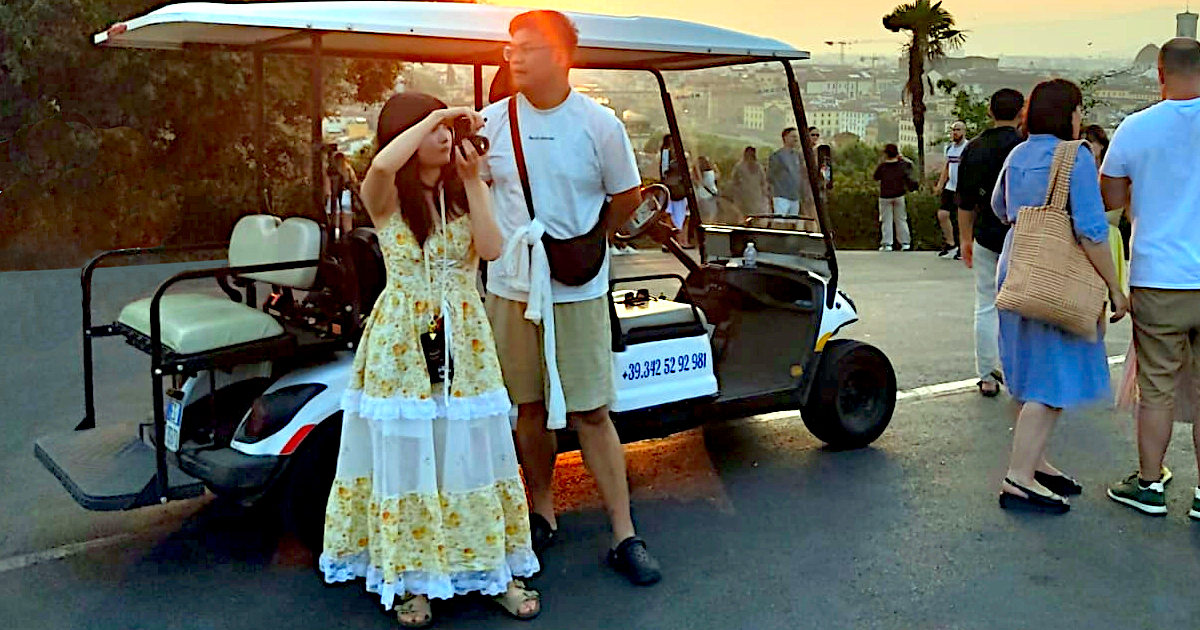
Enjoy the view of Florence, including the Duomo, Giotto’s Bell Tower, Ponte Vecchio, and the Uffizi complex. Take photos of the city from various angles; it’s one of the most popular spots for sunset or nighttime photos. Stroll and relax on the benches and along the tree-lined paths behind the square. Watch street performers, musicians, and small acts that often perform in the square. Buy souvenirs and tourist items from occasional stalls or nearby street vendors. Eat and drink at the bars, restaurants, and kiosks located along the paths leading to the square and in the surrounding streets (the terrace itself is an ideal spot for a casual picnic). Use the square as a starting or ending point for walks to San Miniato al Monte and the surrounding hillside trails. Join us on a golf cart tour of the Piazzale Michelangelo area; you can spend anywhere from an hour to a full day in this magical place, and with our help, explore every corner comfortably and safely by golf cart.